
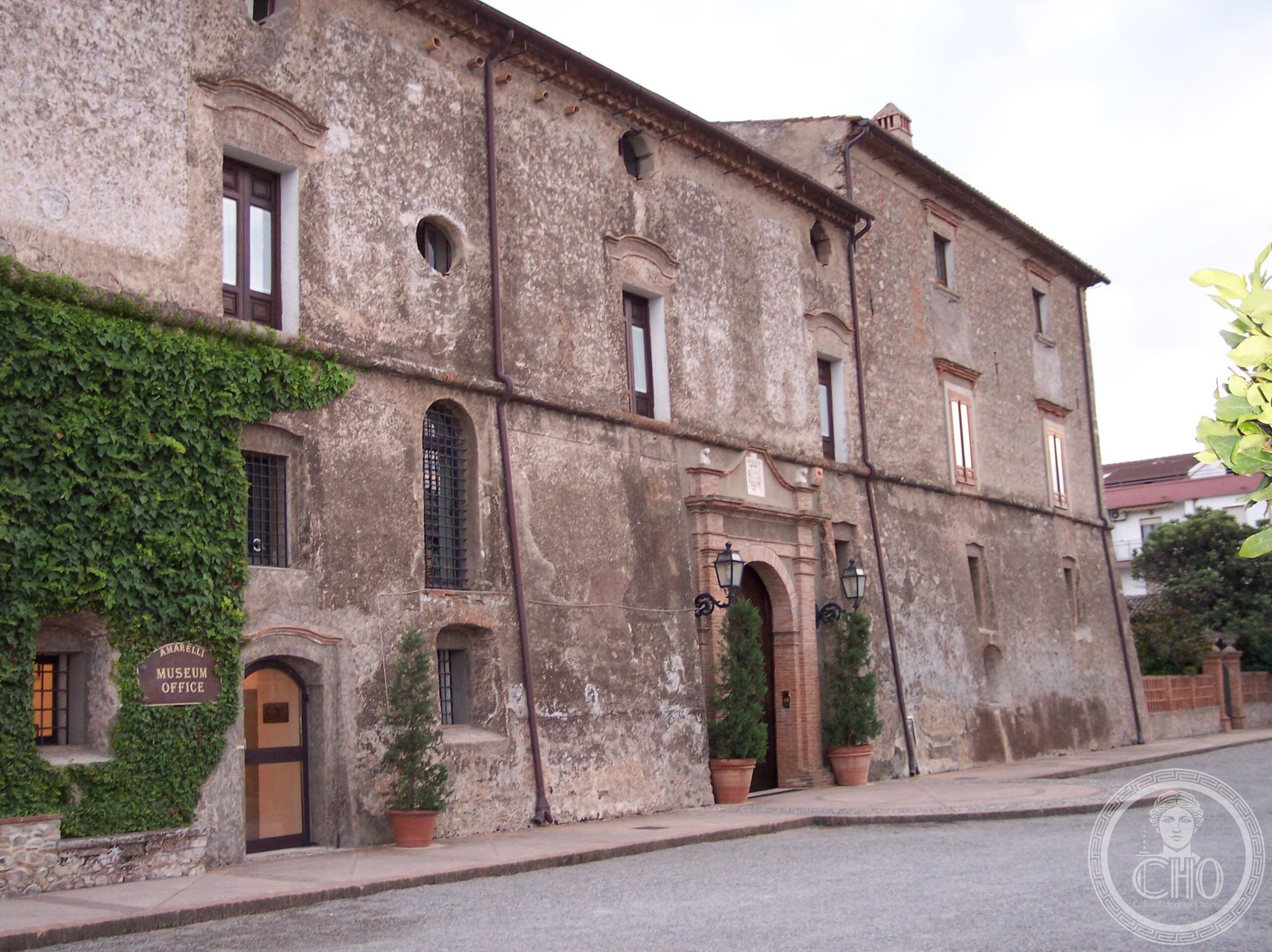
Museo della Liquirizia “Giorgio Amarelli”
The Museo della Liquirizia “Giorgio Amarelli” in Rossano, Calabria, is dedicated to the history of liquorice cultivation and production in southern Italy, housed within the Amarelli family estate that has manufactured liquorice continuously since at least 1731. One of the oldest family businesses in Italy still operating in its original form, the Amarelli concern and its museum together preserve four centuries of agro-industrial heritage in a region where the cultivation of Glycyrrhiza glabra has shaped landscape, economy, and culture alike.
At a glance
- Type
- Agro-industrial heritage museum
- Period
- Production documented from 1731; museum established 20th century
- Style
- Historic factory and estate complex
- Location
- Rossano (Corigliano-Rossano), Province of Cosenza, Calabria, Italy
- Coordinates
- 39.6111° N, 16.6332° E
Overview
The Amarelli family has extracted and processed liquorice root on the Ionian coast of Calabria since the early 18th century, making their estate one of Italy’s longest-running family enterprises. The museum, created within the historic factory complex, documents this extraordinary continuity through machinery, archival records, packaging, and personal objects spanning nearly three centuries. It received the Guggenheim Impresa e Cultura prize in 2001 in recognition of its value as an industrial heritage site.
History
Glycyrrhiza glabra grows wild along the Ionian coastal plain of Calabria, and local communities have harvested its roots since antiquity. The Amarelli family formalised production in the 18th century, developing extraction techniques that produced pure liquorice paste exported across Europe. The estate survived through periods of economic disruption, including both World Wars, by adapting its product range — from medicinal tablets to the iconic cylindrical tins of liquorice pastilles still sold today. The museum was created to open this industrial memory to the public while production continues in adjacent buildings.
What you see
Visitors move through rooms displaying antique extraction presses, copper boiling vessels, and drying equipment that chronicle the evolution of liquorice processing from hand-powered to mechanical methods. Hundreds of historic tins, labels, advertising posters, and correspondence with international buyers illustrate the global reach of Calabrian liquorice in the 19th and early 20th centuries. Personal archives of the Amarelli family — portraits, ledgers, domestic furnishings — contextualise the enterprise within the social history of a southern Italian landowning dynasty.
Cultural significance
The Amarelli estate represents a rare case of unbroken agro-industrial continuity in the Italian Mezzogiorno, a region whose manufacturing heritage is often under-documented. Its museum demonstrates that southern Italy possessed sophisticated processing industries long before the 20th century, challenging persistent narratives of the region as purely agricultural. The Guggenheim prize recognition confirmed its status as a model for heritage-based enterprise.
Practical information
- Address
- Contrada Amarelli, Rossano (Corigliano-Rossano), CS, Calabria, Italy
- Hours
- Check official website for current opening hours; the museum shop is generally open during business hours
- Admission
- Admission is free; check official website to confirm
Getting there
The estate is located on the SS106 Ionian coastal road north of Rossano. By car from the A2 motorway, exit at Sibari and follow the SS106 south towards Rossano for approximately 10 km; the Amarelli estate is signposted. The nearest train station is Rossano on the Taranto–Reggio Calabria coastal line; the estate is reachable by taxi or local bus from the station.
Sources & resources
Find it on the map
See this place and what’s around it →📷 Diventa un fotografo di Cultural Heritage Online
Condividi le tue foto dei luoghi: restano pubblicate con la tua firma come autore. Più vengono viste, più ti fai conoscere — e presto un concorso premierà le foto più apprezzate.
Accedi o registrati gratis per aggiungere una foto